

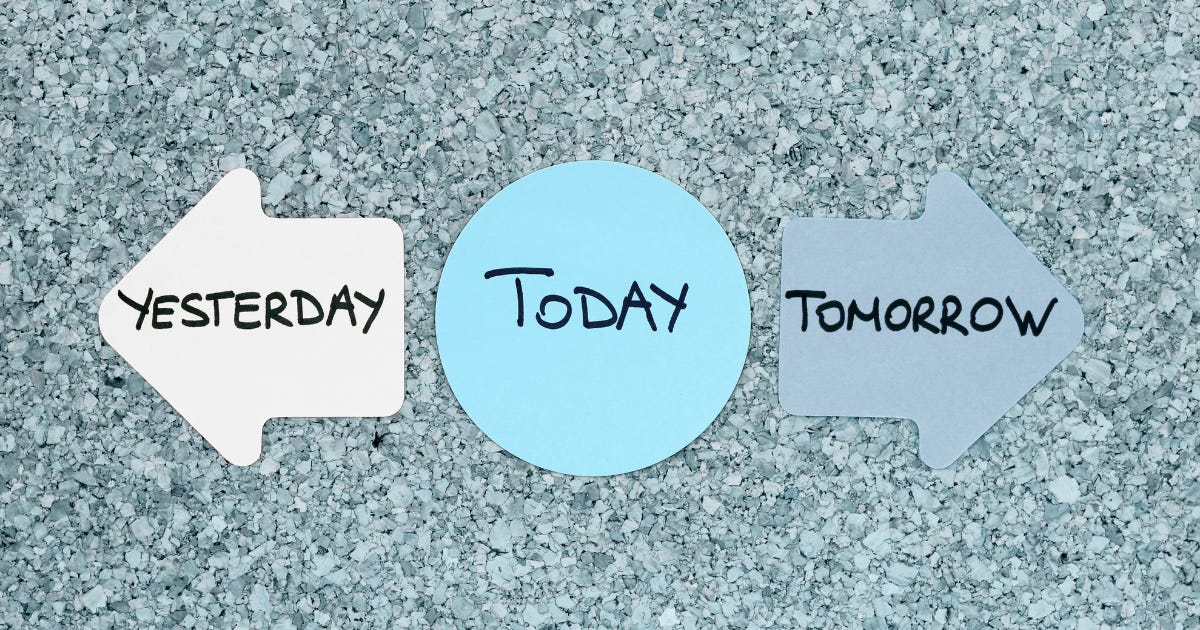
There’s a particular kind of distress that feels completely present-tense, and isn’t. But we mistake it for the present.
Something happens: someone doesn’t respond when we expected them to, or we get deprioritised in a small but noticeable way, or there’s a silence where we thought there’d be a sound. And our nervous system doesn’t just register it and move on… it floods us.
Our chest might tighten, thoughts race, adrenaline pumping.
Already three steps ahead. Building a case about what this means, what it says, and what comes next.
From the outside, this can look like an overreaction. From the inside, it can feel like an accurate reading of the situation.
That gap is the problem.
What I’ve learned through therapy, study, and paying attention to myself when I’d rather look away, is that the intensity of the flood is hardly ever about the thing that just happened.
Most of the time, it’s really about everything that came before it. Previous times that felt similar, and which our body and mind tell us is happening again.
Old wounds leave bruises. New events can match those previous wounds closely enough to set the same alarm off. And the alarm doesn’t care about the difference between then and now, it just fires. That’s its job: to warn us that something we didn’t like might be happening again.
In that moment, it can feel like you’re drowning in three centimetres of water.
Why turning outward doesn’t help.
For a long time, my response to this was to do what the alarm told me to: monitor. Wait, scan for signals, look for evidence that the thing I feared was either happening or not.
The problem is that when we’re looking outward for confirmation that something is wrong now, just like it was in the past, we’re running the alarm whether we need to or not.
We stay in the heightened state and tend to interpret everything through the same fearful lens, which means we’re not actually reading the present situation at all. We’re just finding the past in it.
“We’re not actually reading the present situation at all. We’re just finding the past in it.”
There was a period not long ago when someone close to me went quiet in a way that felt familiar. Not a fight, not a clear thing I could point to. Just a shift in temperature. A message left on read, a plan that didn’t come together. And something in me responded as though I already knew exactly what it meant, as though the situation had already been decided and I was just waiting for confirmation.
I began composing responses to things that hadn’t been said yet. Already defensive, already hurt, already somewhere ahead of the actual moment.
What was actually happening was ordinary, as it turned out. Life, tiredness, bad timing. But my alarm had matched the bruise of something older, and I was already halfway through a reaction to that older thing before the present one had even been resolved.
The gap between what was happening and what I was feeling was enormous, and I only noticed it when I put the phone down and went and did something else.
What tends to help, I’ve found, is that moment of deliberate stepping back. Not analysing the situation, not building a case. Just noticing that the alarm has fired, and asking whether it’s responding to right now, or to something older.
What turning inward actually looks like.
What I’ve been trying to do instead, and this is genuinely a practice and not a resolution, is turn back toward myself.
I’ve started taking 20 minutes. To do something I was going to do before the alarm went off. Not to distract, and not to prove a point.
But because we tend to feel more settled when we’re living our own lives with some intention, rather than waiting for external confirmation that things are fine. When I do what I said I’d do, something small but real registers: I can rely on myself. That accumulates, slowly, into something that outside signals can’t completely undo.
The walk. The study time. The meal we actually cook instead of ordering in, or not eating. The message we write to someone we love. The book we open, even for twenty minutes.
These are not fillers while we wait to feel better… they are what better is made of.
The other thing that helps, and this one is smaller but I’ve found it true: a phrase short enough to say in a breath.
I’m here.
Not as an affirmation in the poster-on-the-wall sense. Just felt. And said while I do something physical: feet on the floor, a long exhale, the moment of moving from one room to another. Over time, the two things bind together and the phrase starts to work faster.
The flood still comes, as old injuries don’t disappear because we’ve named them.
But our response can change and reflect the present rather than the past. And for anyone who’s been flooded, that’s safety and calm.

Three things to try.
Don’t get sideswiped.
Next time you notice the flood starting, before you reach for the phone or start composing a message in your head, do one small thing you were already planning to do that day first. See what it does to the feeling.
Try the phrase “I’m here.”
Just quietly, to yourself, attached to something physical: the moment your feet hit the floor in the morning, or a long breath before you walk into a room. I’m here. See how it feels.
Map it.
Think back to the last time you were flooded by something that probably didn’t deserve the intensity. Not to relitigate it, but to ask: what did the situation remind you of? What older version of this have you lived before?
See if you can name it. Knowing where the alarm was built doesn’t stop it firing, but it does make the noise a little less convincing.